

Walk into almost any high school today and you will not see what past generations saw. There are no groups huddled around cigarette packs or clouds of smoke drifting through the air. Instead, everything looks calm. Students walk the halls, laugh with friends, and check their phones like any normal day. But look closer and you will notice something different. A quick inhale behind a sleeve, a small device passed between hands, a habit that leaves almost no trace.
That is what makes vaping so dangerous. It hides in plain sight.
This is not a loud problem. It is a quiet one, and quiet problems tend to spread faster because no one feels the urgency to stop them. By the time people realize how big it has become, it is already part of the culture.
It Doesn’t Look Like Addiction Anymore
Most people still picture addiction the old way. They imagine obvious warning signs like falling grades, mood swings, or getting into trouble. Those signs still exist, but vaping does not always trigger them right away. A teen can vape regularly and still function at a high level in school, sports, or social life.
That creates a false sense of safety.
When a behavior does not disrupt life immediately, it rarely gets questioned. It gets accepted. A student who is vaping daily can still show up, perform, and blend in. On the surface, everything looks fine. Underneath, a dependency is forming quietly, without the drama people expect.
This is where many adults get it wrong. They wait for visible damage before they take something seriously. With vaping, by the time the damage is visible, the habit is already deeply rooted.
Designed to Be Easy, Not Safe
It is worth saying plainly. These products are not just created to exist. They are created to appeal.
The flavors alone tell the story. Cotton candy, mango, mint, fruit punch. These are not aimed at someone trying to quit a long history of smoking. They are designed to taste good from the first inhale, especially for someone new. That lowers the barrier to entry in a big way.
Then there is the design of the devices. They are sleek, small, and look more like tech than anything related to tobacco. A vape can pass as a flash drive or a pen, which makes it easy to carry and easy to hide. Charging it feels like charging a phone, not maintaining a habit tied to addiction.
The nicotine delivery is just as intentional. It hits quickly, but without the harshness of a cigarette. There is no strong physical pushback from the body. That smooth experience teaches the brain that this is something easy, something manageable, something worth repeating.
And repetition is where the problem begins.
“It’s Just Vapor” Sounds Harmless, But It Isn’t
Talk to teens about vaping and you will hear a common phrase. They say it is just vapor, as if that makes it harmless. The word itself sounds clean, almost like steam from a shower. It does not carry the same weight as smoke.
But that language is misleading.
What is being inhaled is not harmless water vapor. It contains nicotine, which is highly addictive, along with other chemicals that can irritate the lungs and affect how the brain develops. The full long-term impact is still being studied, which should raise concern rather than lower it.
Here is where confusion creeps in. Because vaping is newer than cigarettes, there is less long-term data. Some people interpret that as a sign that it might not be as serious. In reality, it just means we are still catching up to understanding it.
And history has shown that waiting for full clarity often comes too late.

The Social Engine Behind the Habit
Vaping is not just an individual choice. It is a shared experience.
Teens rarely start vaping alone. It usually happens in a group setting where curiosity meets opportunity. Someone offers a device. Someone else shrugs and says why not. A few laughs later, it becomes part of the moment. That moment turns into a pattern.
Over time, vaping becomes part of the social routine. It is something people do together, like sharing snacks or scrolling through videos. That shared behavior makes it feel normal, even expected in certain circles.
Once a habit is tied to social connection, it becomes harder to walk away from. Quitting is no longer just about breaking a physical habit. It can feel like stepping away from a group, and that is a much tougher decision for a teenager to make.
Peer Pressure Isn’t Loud Anymore
A lot of people still think of peer pressure as direct and obvious. Someone pushing, insisting, or daring another person to try something. That still happens, but it is not the main driver anymore.
Today, peer pressure is quieter.
It shows up as normalization. If everyone around you is doing something and no one is treating it like a big deal, it lowers your guard. You start to think it cannot be that serious. You do not want to feel out of place, so you join in without much thought.
There is no big moment of decision. It is small, almost casual.
And that is what makes it effective. It does not feel like pressure, but it still shapes behavior.
The Brain Adapts Faster Than Expected
Nicotine has a strong effect on the brain, especially in teens. The brain is still developing, still forming patterns that will last into adulthood. When nicotine is introduced during this stage, it can lock into those patterns quickly.
What starts as occasional use can turn into something more frequent without much warning. The brain begins to connect vaping with relief, focus, or even just comfort. Over time, it becomes a go-to response for stress, boredom, or social situations.
That is how dependence builds.
It is not always dramatic. It is often subtle, built on repetition and routine. By the time someone realizes they rely on it, the habit is already part of their daily life.

Schools Are Behind the Curve
Many schools are still addressing substance use with outdated approaches. They focus on cigarettes, alcohol, or drugs that were more visible in the past. Meanwhile, vaping is happening in restrooms, hallways, and even classrooms without drawing much attention.
Students notice this gap.
When prevention efforts feel out of touch, they lose credibility. Teens are quick to tune out messages that do not reflect their reality. If the information feels old or disconnected, it gets ignored.
That leaves a space where misinformation and assumptions take over. And in that space, vaping continues to grow without strong resistance.
Parents Often Miss the Early Signs
Parents are not ignoring the issue on purpose. The reality is that vaping is easy to hide.
There is no strong smell that lingers on clothes. The devices are small and often unrecognizable. A teen can use one quickly and move on without leaving obvious evidence behind. That makes it hard to detect, especially in the early stages.
By the time a parent discovers it, the behavior is often not new. It has been happening for a while, quietly building into a habit.
The reaction is usually intense, which makes sense. But strong reactions can sometimes shut down communication instead of opening it. A teen who feels judged or attacked is less likely to be honest about what is really going on.
And honesty is what makes prevention and change possible.
The Myth of the “Type of Kid”
There is a common belief that substance use only affects certain kinds of teens. The ones who struggle in school or get into trouble. That belief does not hold up with vaping.
This cuts across groups.
High achievers vape. Athletes vape. Social leaders and quiet students alike. This is not about personality or discipline. It is about access, exposure, and environment.
When something becomes normal in a peer group, it spreads. It does not check report cards or resumes before it does.
That is why assuming “my kid would never” can create a blind spot. Not out of carelessness, but out of outdated assumptions about how these behaviors show up.
What Actually Helps
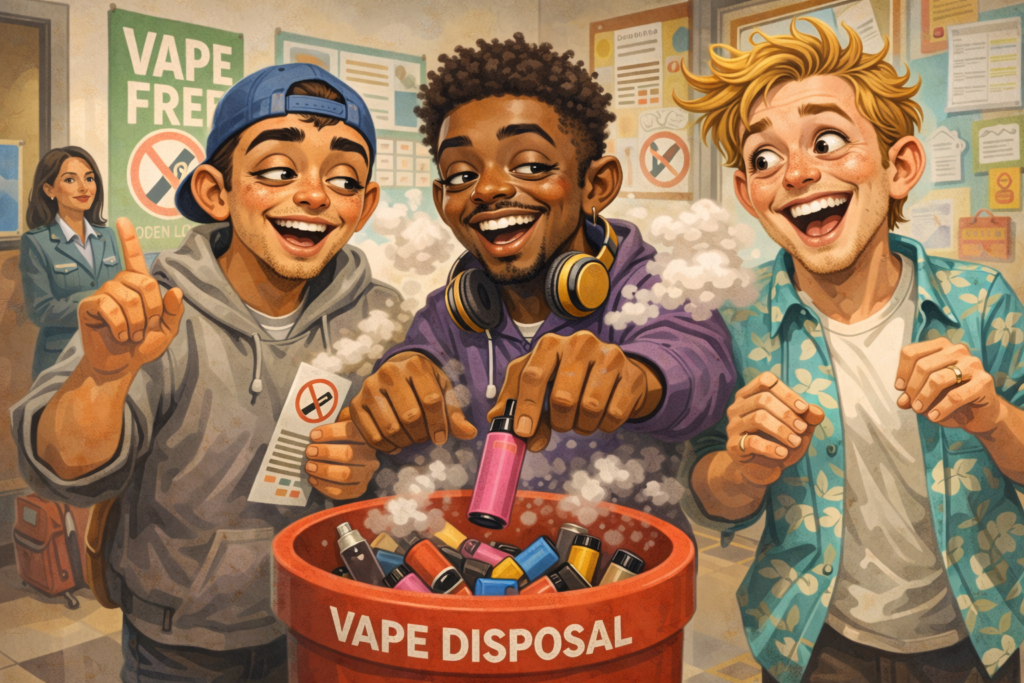
Scare tactics have been used for years, and their impact is limited. Teens are not easily convinced by exaggerated claims. If the message feels over the top, it gets dismissed.
What works better is honesty.
Clear, real conversations about how addiction forms and why these products are designed the way they are can go much further. Teens respond better when they feel respected and informed, not talked down to.
Connection matters just as much as information. A teen who feels heard is more open to listening. A teen who feels judged is more likely to shut down and continue the behavior in secret.
Prevention also has to reflect the current reality. It has to speak to what is happening now, not what happened a decade ago.
A More Realistic Approach
Not every teen who vapes will stop immediately. That is just the truth.
So the conversation cannot only focus on complete avoidance. It also needs to include practical steps toward reducing harm and eventually quitting. That might mean understanding what they are using, recognizing early signs of dependence, and having a plan to cut back.
This is not about approval. It is about meeting reality where it is.
Ignoring behavior does not make it disappear. Addressing it honestly creates a path forward.
Looking at the Bigger Picture
Vaping is not just about a device. It is tied to stress, social pressure, curiosity, and the need to belong. Teens are navigating a fast-moving world with constant input and pressure from many directions.
They look for ways to cope, connect, and manage that pressure. Vaping happens to be one of the easiest options available right now.
If we only focus on the device, we miss the larger issue. The behavior is a signal, not just a problem on its own.
Where Things Stand Now
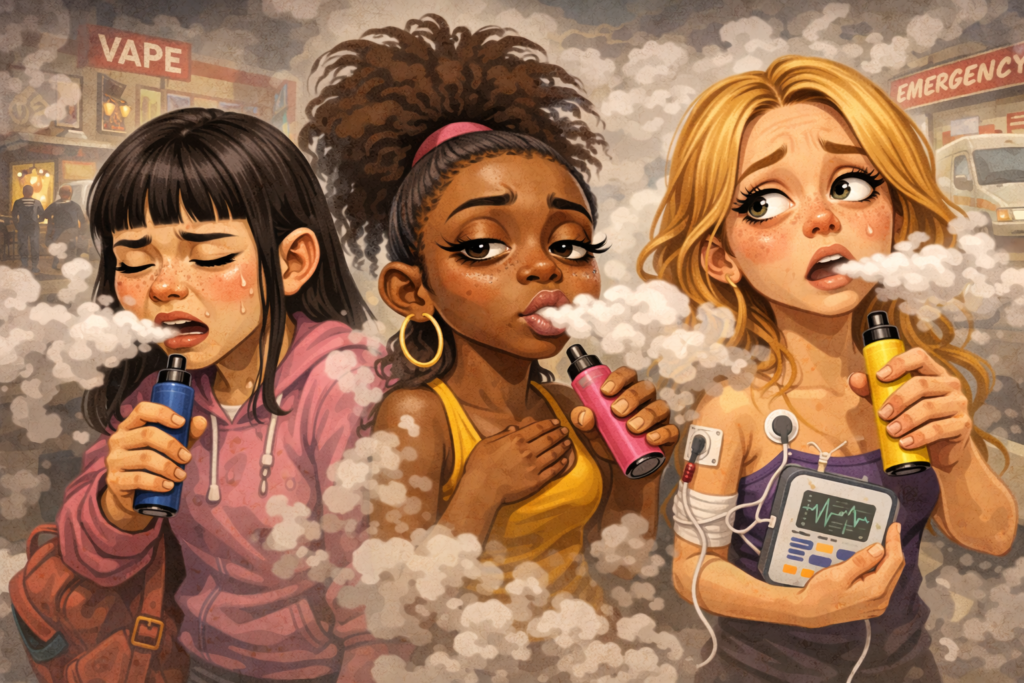
Vaping has become part of everyday teen life in a way that many adults have not fully caught up with. It is quiet, easy to hide, and socially accepted in many spaces. That combination makes it harder to confront.
But ignoring it will not make it go away.
It requires updated conversations, better awareness, and a willingness to face what is actually happening instead of what we assume is happening. The sooner that shift happens, the better chance there is to slow it down.
Right now, the problem is not invisible.
It is just being overlooked.
If this resonated with you, stay connected.
PFWorks, Inc. supports teens and young adults navigating real life transitions with practical guidance, trusted resources, and human-centered support. Subscribe to our newsletter to receive updates, resources, and stories that focus on progress, dignity, and real solutions.
Stay informed. Stay connected. Be part of the support.
Canty