
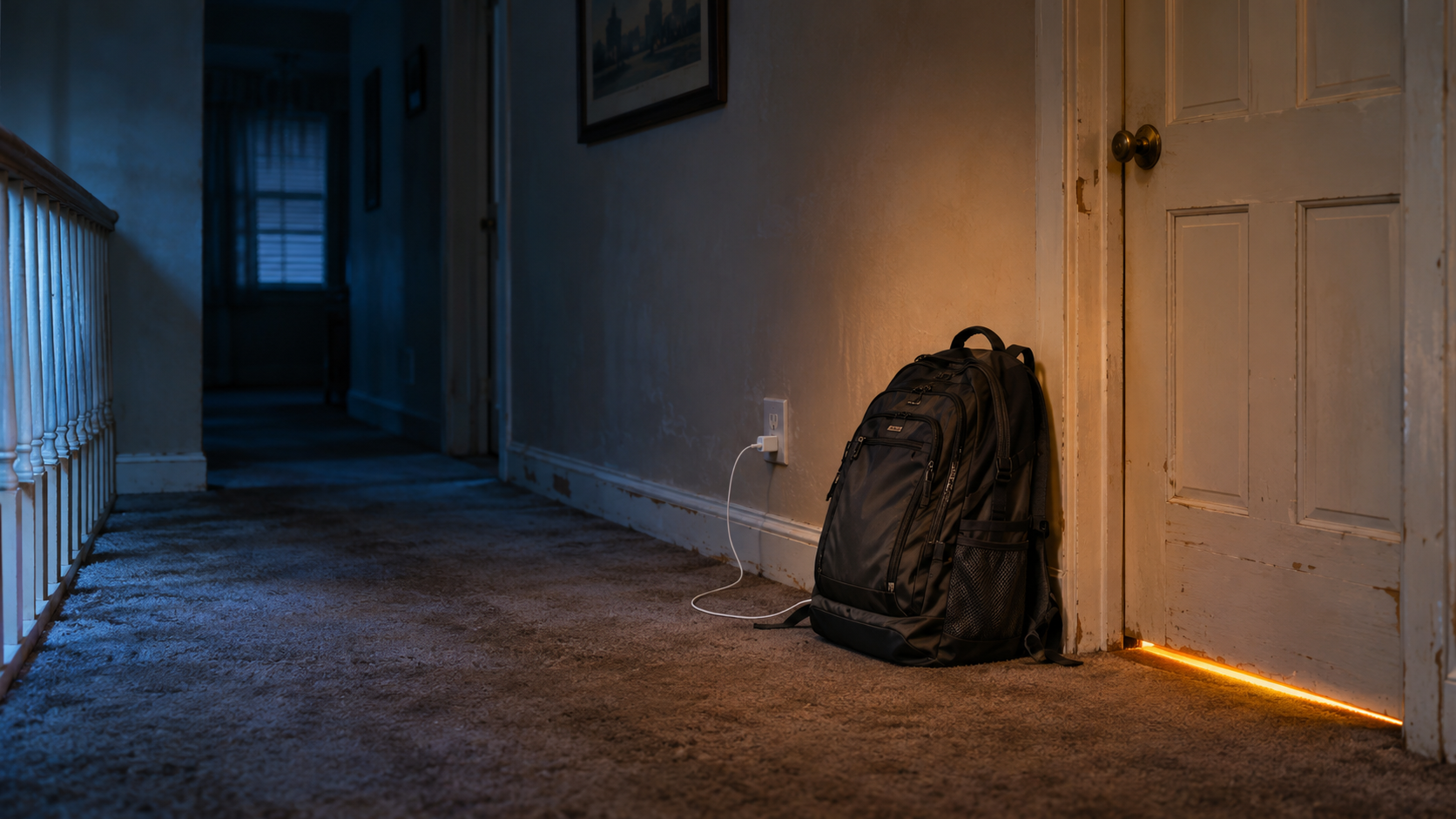
It’s late, and the house has finally gone quiet. It’s not the good kind of quiet. It’s the kind that comes after the shouting, when everyone has gone to separate rooms and nobody is sleeping. A backpack sits by the bedroom door with a phone charger, a hoodie, and whatever else would fit. The question isn’t really whether to leave anymore. It’s where to go, and whether anywhere out there is safer than here.
We don’t know whose house that is. It could be a lot of houses. What we do know is that this moment, or something close to it, is one of the most common ways young people end up without a stable place to live. This post is our honest look at what the research says, what it doesn’t say, and what we at PFWorks are still trying to understand. If you’re a young person in that quiet house right now, the help lines are near the bottom, and you can skip straight there.
What the Research Actually Says
The largest national study of youth homelessness in the United States is called Voices of Youth Count, and it was run by Chapin Hall at the University of Chicago. Its survey found that over the course of one year, about 1 in 10 young adults ages 18 to 25 and about 1 in 30 teens ages 13 to 17 went through some form of homelessness. That counts couch surfing and staying with whoever would take them, not just sleeping outside. When researchers sat down with young people and asked how it started, the answers rarely began with housing. They began earlier, with things like poverty, family conflict, the death of a parent, or a move into foster care.
One finding stuck with us more than the others. In a follow-up report based on in-depth interviews with 215 young people, almost half said they’d faced discrimination from someone in their own family or household. That was especially true for LGBTQ and multiracial youth. The same research found that LGBTQ young adults had a 120 percent higher risk of reporting homelessness than their straight and cisgender peers. For a lot of these young people, home wasn’t the safe place it’s supposed to be.
We want to be honest about one more thing. These numbers come from reports published between 2017 and 2019. They’re still the most complete national picture anyone has, and that’s why researchers keep pointing back to them. But we don’t know exactly how things have shifted since then. We’d rather tell you that plainly than pretend the numbers are fresh.
Leaving Isn’t Always a Choice
People often use the word “runaway” as if every young person who leaves home simply decided to go. That word hides a lot. Some young people do leave on their own, often because staying feels more dangerous than going. Others are told to get out, or they come home to find the locks changed. Some leave for a weekend that turns into a month. And some never fully leave at all, but bounce between home, a friend’s couch, and a relative’s spare room until nobody is quite sure where they live.
The difference matters, because the help looks different in each case. A young person pushed out by a parent may need a safe adult and a place to sleep tonight. A young person thinking about leaving may need someone to talk through a plan before they walk out the door. A young person who is being hurt at home may need someone who can step in. Lumping all of this under one word makes it harder for the adults around them to see what’s really going on.

Conflict Versus Danger
Every family argues. Teens and parents clash over curfews, grades, friends, and phones, and a lot of that is normal, even when it gets loud. So how do you tell the difference between a home that’s hard and a home that isn’t safe? We don’t think there’s a perfect line, and we’re wary of anyone who claims there is. Still, some signs point clearly toward danger.
- Someone at home hits, chokes, or physically hurts you, or threatens to.
- You’re afraid to go home, not just annoyed about it.
- Someone touches you in ways you don’t want, or pressures you sexually.
- You’re kept from food, sleep, school, or medical care as a punishment.
- You’re told you can’t live there because of who you are, including who you love or how you identify.
- Drugs, alcohol, or someone’s untreated mental health crisis makes the house unpredictable and scary.
If any of those sound familiar, that’s not “just family drama.” It’s the kind of situation the help lines below were built for. You don’t have to be sure, and you don’t have to be in danger this exact minute, to reach out. Talking to someone is how a lot of people figure out what’s actually happening in their own home.
If You’re Thinking About Leaving
We’re not going to tell you to stay somewhere that isn’t safe. We’re also not going to pretend that leaving is simple. Life away from home can bring its own dangers, especially for young people who don’t have money, an ID, or a safe place lined up. People who exploit young people look for exactly that kind of gap. So if you can, we’d ask you to make one call or send one text before you go.
The National Runaway Safeline exists for this moment. You don’t have to have already left to reach out. Their crisis team can listen, help you think through your options, and talk about what a safer plan might look like. They also offer mediation, which can help when you and a family member keep trying to talk and it keeps blowing up. If leaving is the right call, they can point you toward shelters and other resources so you’re not walking into the night with no plan.
A few other steps can help if you have time. Keep a charger and a short list of phone numbers written on paper, in case your phone dies or gets taken. Know where your ID, birth certificate, or Social Security card is, if you can get to them safely. Think of one adult outside your home you trust, like a teacher, coach, counselor, or relative. None of this has to happen all at once, and even one step makes the next one easier.
If You’re the Adult Someone Turned To
Sometimes the first person a young person tells isn’t a parent. It’s a teacher, a coach, a neighbor, or a friend’s mom. If that’s you, the most useful thing you can do first is simple. Listen, and take it seriously. You don’t need to have every answer. Questions like “Are you safe tonight?” and “Do you have somewhere to sleep?” matter far more than “What did you do to make them so mad?”
Be honest about what you can and can’t do. If your job makes you a mandated reporter, you may be required by law to report suspected abuse, and the young person deserves to know that before they tell you everything. The rules about minors leaving home, and about adults letting them stay, also vary from state to state. That’s one reason the help lines below take calls from worried adults, not only from young people. One call can help you figure out your next step without guessing.
What We Don’t Know Yet
Here’s where we have to be honest about ourselves. PFWorks has been doing this work since 2018, and we’ve had real misses along the way. One lesson we keep relearning is that we can’t build support for young people based on what we assume they need. We have to ask them. That’s why one of the first things we’re planning is an anonymous survey asking teens and young adults what would actually help. It hasn’t launched yet, and we’ll share what we learn once it does.
There’s a lot we still don’t know. We don’t know what made the difference for young people who found a safe way back home, compared to those who never could. We don’t know how many adults saw the warning signs and simply didn’t know what to do with them. We also don’t know which kinds of support young people in family conflict would truly use, as opposed to the kinds adults think they’d use. Those are the questions we’re carrying into the work, and we’d rather name them than act like we’ve solved them.
Where to Get Help Right Now
If you or someone you know is in immediate danger, call 911.
- National Runaway Safeline: Call or text 1-800-786-2929 (1-800-RUNAWAY), or chat at 1800runaway.org. It’s free, confidential, and open 24/7 for young people and for the families and adults worried about them.
- Childhelp National Child Abuse Hotline: Call or text 1-800-422-4453 (1-800-4-A-CHILD), or chat at childhelphotline.org. It’s open 24/7 for young people being hurt at home and for adults worried about a child.
- 988 Suicide & Crisis Lifeline: Call or text 988, or chat at 988lifeline.org. It’s open 24/7 for anyone in emotional distress, including stress from what’s happening at home.
- The Trevor Project: Call 1-866-488-7386, text START to 678-678, or chat at thetrevorproject.org. It’s open 24/7 for LGBTQ+ young people.
- 211: Dial 2-1-1 or visit 211.org to find shelters, food, and other help near you. Services vary by area.
We checked these on November 16, 2026. Numbers and services can change, so if one doesn’t work, try another on this list.
A Question We’re Still Asking
We’d like to hear from the adults reading this. When a young person in your life opened up about trouble at home, what helped you know what to do? And what do you wish you’d known sooner? Your answers will help shape what we build next. If you’re a young person reading this from that quiet house, please reach out to one of the lines above tonight.
R.L. Canty | PFWorks, Inc.