
Part 4: Deepfakes and Intimate Image Abuse
The Nightmare of Seeing Yourself in a Lie
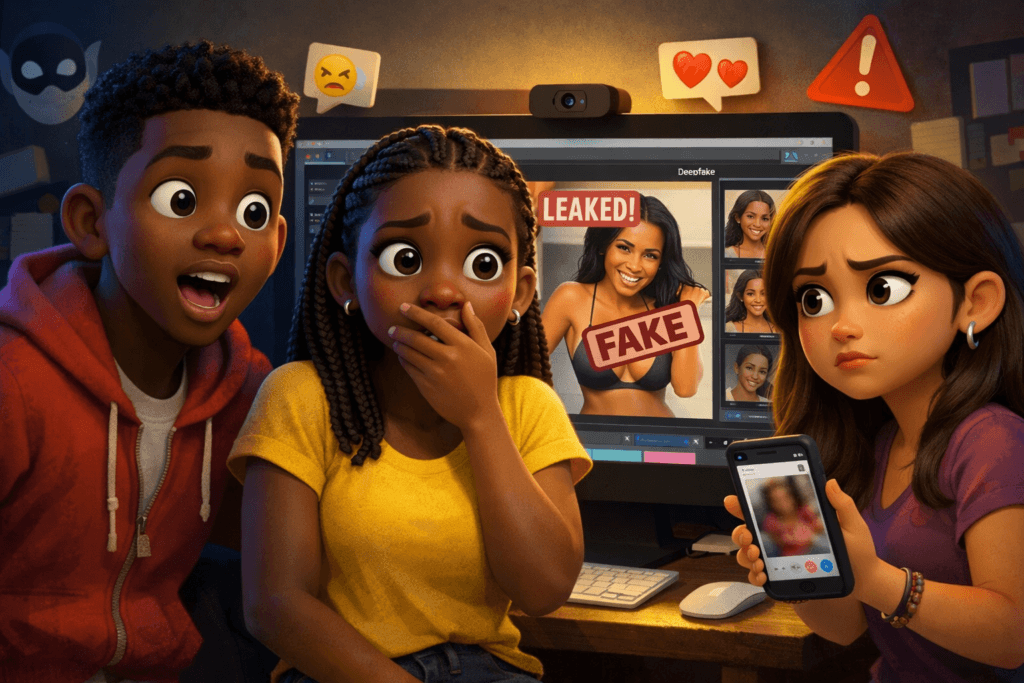
Imagine waking up to a text from a friend saying, “Is this you?” Attached is a video you never made, showing your face in a compromising scene. It looks real. The lighting, the voice, even the little expressions that feel uniquely yours. But it isn’t you. It’s a deepfake, stitched together by software that doesn’t care about your dignity.
For many teens and young adults, this isn’t a distant science-fiction scenario. It’s happening now. Deepfake porn has exploded, targeting young women and sometimes young men, creating reputations that collapse overnight.
The cruelest part is the powerlessness. Victims are left proving that the video is fake, a task harder than you’d think when the internet thrives on drama, not truth. The lie spreads faster than any correction.
When Trust Becomes a Weapon
Even without deepfakes, intimate image abuse is already rampant. A boyfriend or girlfriend asks for a photo “just for them.” It feels intimate, safe, like proof of trust. Then the relationship ends, and that photo becomes a weapon. It’s shared with friends, posted in group chats, or worse, uploaded to public sites.
For the victim, the betrayal is gutting. It’s not just about exposure, it’s about realizing someone they trusted turned their vulnerability into humiliation. These violations can’t be undone. Once an image is out, it’s nearly impossible to claw back.
Young people often describe the experience as a kind of digital assault, one that leaves scars on their mental health, their friendships, and their ability to feel safe in their own skin.
The Public Shaming That Never Ends
Stories surface every year of teens whose private images went public. A high school girl in California discovered her classmates had spread a fake explicit video of her, generated from a simple yearbook photo. She stopped going to school, overwhelmed by whispers and ridicule.
In another case, a boy’s private photo was leaked after a breakup. He became the punchline of cruel jokes online, leading him to transfer schools entirely. These aren’t rare accidents—they’re patterns. Public shaming used to be local, confined to a school hallway or neighborhood.
Now it’s global, permanent, and searchable. For teens still building their identities, that kind of spotlight can crush them before they’ve even had the chance to grow.
Why the Internet Loves a Scandal
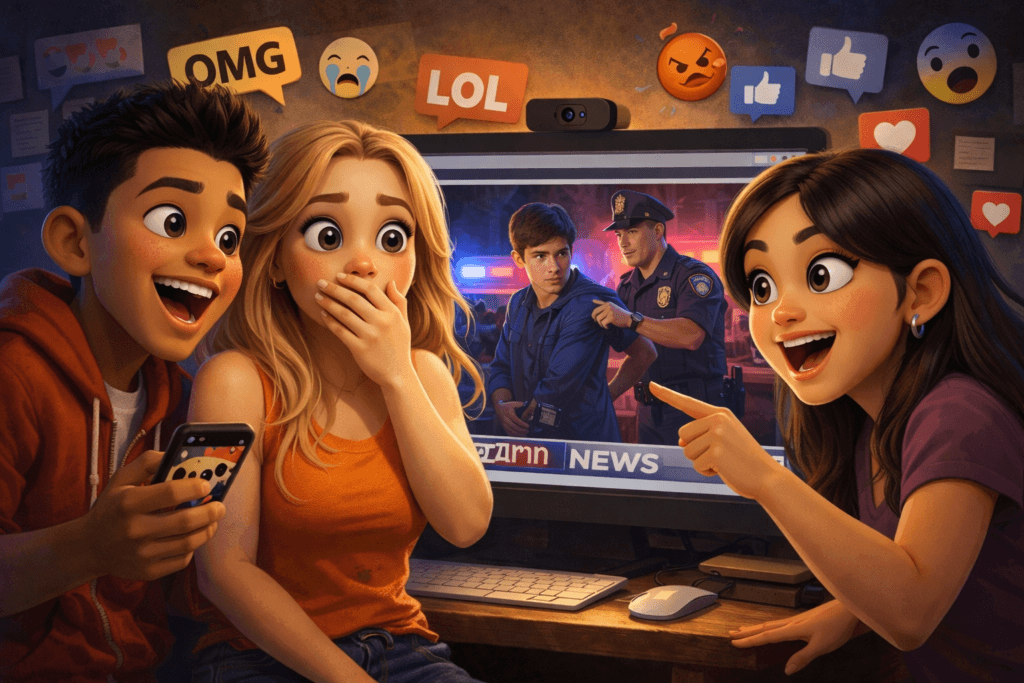
Part of what makes deepfakes and leaks so destructive is how eagerly people consume them. The internet thrives on scandal. A fake video generates clicks, comments, and laughs for everyone except the victim. Even when classmates know the video is false, they watch anyway.
Some justify it as curiosity. Others see it as harmless entertainment. But for the person targeted, it’s a living nightmare. Their face, their body, their dignity are reduced to a meme. The cruelty lies not just in the creation of these images, but in the casual way bystanders amplify them.
Online culture often excuses this with a shrug—“It’s just the internet.” But the consequences are anything but casual. The damage seeps into real lives, shaping how victims are treated offline as well as online.
Mental Health in the Aftermath
The fallout from intimate image abuse isn’t measured only in views or shares. It’s measured in anxiety, depression, panic attacks, and in some cases, suicide. Teens describe feeling like they’ve lost ownership of their own bodies, even though nothing physical was done to them.
They live in fear of strangers recognizing them from something they didn’t consent to. Their futures feel hijacked, their sense of safety shattered. Parents and teachers often struggle to respond because the technology moves faster than the laws. Victims end up isolated, ashamed, and unsupported.
The trauma is deep not only because of what happened, but because of the silence that surrounds it. Few want to talk openly about being targeted, which leaves survivors carrying the burden alone.
Fighting Back Against a Broken System
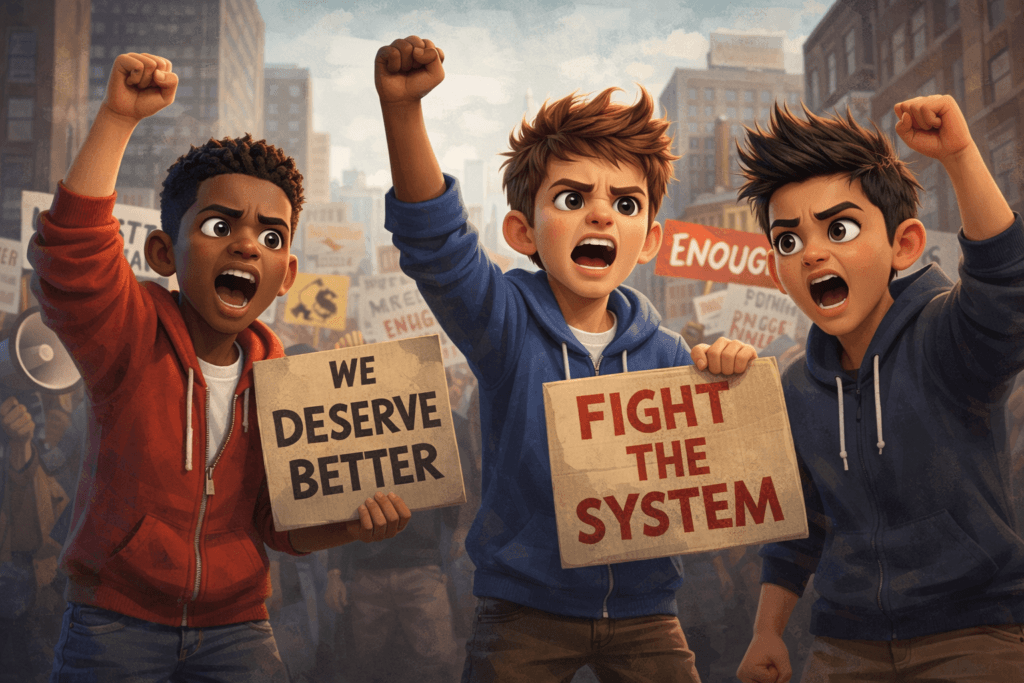
So what can be done? The truth is messy. Laws are slowly catching up, but enforcement lags. Platforms promise to take down nonconsensual images, but removal is often too slow to matter. For teens and young adults, prevention feels like the only option—but prevention shouldn’t mean silence or fear.
It should mean education about trust, consent, and the permanence of sharing. It should mean building communities where violating someone’s privacy isn’t shrugged off but condemned. And it should mean pressing tech companies to design tools that protect, not just exploit. The fight against deepfakes and leaks won’t be won overnight. But shifting the culture—from treating these violations as “drama” to recognizing them as abuse—is a start.
Teens deserve not just to defend themselves but to live without constant fear of being digitally weaponized.
If this resonated with you, stay connected.
PFWorks, Inc. supports teens and young adults navigating real life transitions with practical guidance, trusted resources, and human-centered support. Subscribe to our newsletter to receive updates, resources, and stories that focus on progress, dignity, and real solutions.
Stay informed. Stay connected. Be part of the support.
Canty