
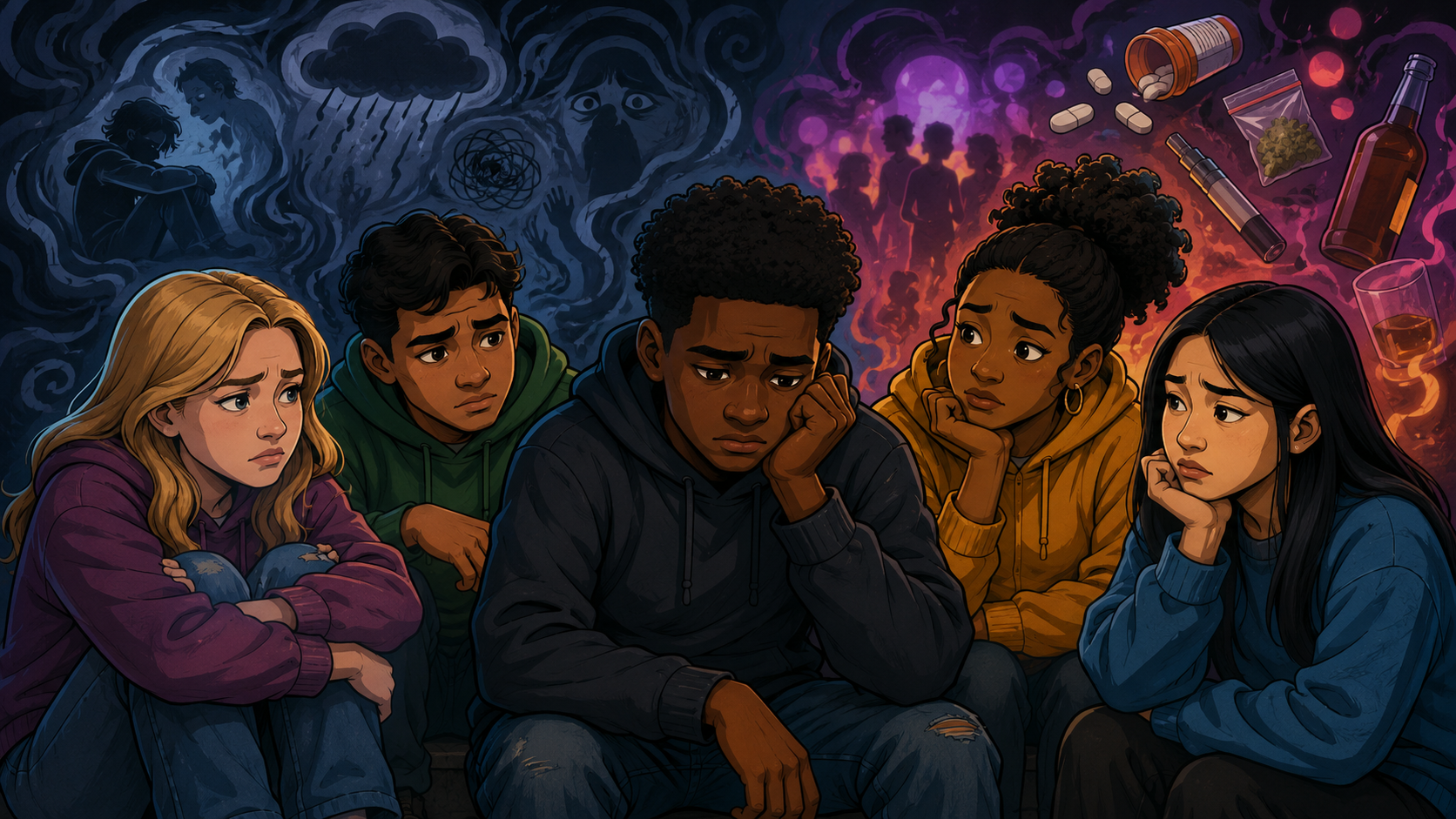
Most substance use prevention programs start with the drug. They talk about what fentanyl does to the brain, what vaping does to the lungs, and what alcohol does to a developing body. That information matters, but it starts in the wrong place. For a lot of teens, the drug is not the starting point. The feeling is.
A teen who is anxious, depressed, grieving, or carrying trauma nobody has named yet is not looking for a high. They are looking for the noise in their head to stop, even for an hour. When something finally makes that happen, it does not read as dangerous. It reads as relief. That is the piece prevention programs keep missing, and it is the piece that actually predicts who ends up struggling with substance use later.
The Feeling Comes Before the Choice
Nobody wakes up and decides to build a dependency. It starts smaller than that. It starts with a bad day that will not end, a home that feels unsafe, or a mind that will not quiet down no matter what a teen tries. Substance use research keeps finding the same pattern. Kids who are already carrying unmanaged emotional pain are far more likely to try something that numbs it, and far more likely to keep using it once they feel what it does.
This is not about weak willpower or bad decision making. It is about a nervous system that has been in distress for so long that anything offering relief starts to look reasonable. A teen who has never learned how to sit with hard emotions, or who has never had a safe adult to process them with, is working with fewer tools than a teen who has. When the emotional pain shows up first, the substance use often follows as an attempt to manage it, not as a random risky choice made for fun.
What Emotional Struggle Actually Looks Like in Teens
Emotional struggle in a teenager rarely looks like sitting quietly and crying. It looks like irritability that seems to come from nowhere. It looks like a kid who used to care about school suddenly not caring at all. It looks like sleep that falls apart, friendships that get dropped, or a sudden obsession with staying busy so there is no time to think. Adults often read these signs as attitude problems or laziness, when they are actually signals that something underneath is not okay.
This matters because the teens showing these signs are the ones most at risk, and they are often the ones getting the least support. A kid acting out gets discipline. A kid withdrawing gets left alone because they are not causing problems. Neither response addresses what is actually happening, and both leave a young person more isolated at exactly the moment they need someone paying closer attention. Substance use often enters right there, in that gap between what a teen is going through and what the adults around them are noticing.
Why Substances Feel Like Relief, Even When They Are Not
It helps to understand what is actually happening in the brain. Substances like alcohol, marijuana, and opioids all interact with the same systems that regulate mood and stress. For a teen whose stress system has been running hot for months or years, that interaction can feel like the first real break they have gotten. The relief is real, even though it is temporary and comes with a cost that builds over time.
This is why telling a struggling teen to just say no rarely works on its own. It treats the substance as the problem, when the substance is actually a solution the teen found for a problem nobody helped them solve. Until the underlying pain gets real attention, from a person or a resource that actually helps, the pull toward whatever provided relief before will keep coming back. Prevention that skips this step is treating the symptom and calling it the cause.
The Populations Carrying the Most Weight
Some groups of young people are dealing with more emotional weight than others, and it shows up clearly in substance use data. Teens aging out of foster care carry loss and instability that most of their peers never experience, and they show some of the highest rates of substance use in the country. Teens navigating trafficking or exploitation are often using substances as one of the only tools they have to survive what is happening to them. Teens who are homeless or housing insecure are managing constant stress with almost no support system to fall back on.
These are not separate issues from substance use prevention. They are the center of it. A prevention program that does not account for foster care instability, trafficking, housing insecurity, and chronic trauma is not actually reaching the teens most at risk. It is reaching the teens who already have the most stability and the least need for intervention in the first place. Real prevention has to start with the young people carrying the heaviest emotional load, not the ones who are easiest to talk to.
Where Prevention Programs Keep Missing It
A lot of prevention programs are built around information. They teach facts about drugs, statistics about overdose, and warnings about consequences. Information matters, but information alone does not change behavior in a teen who is using substances to survive an emotional state they do not know how to manage any other way. You cannot educate someone out of a coping mechanism without giving them something to replace it with.
The programs that actually work tend to do something different. They screen for emotional distress early, before substance use ever starts. They train adults, teachers, coaches, caseworkers, and mentors to recognize the quiet signs of struggle instead of waiting for a crisis. They connect teens to real mental health support instead of a single assembly about drug dangers. Prevention that leads with emotional support tends to reach kids earlier, before substance use becomes the default coping tool.
What Actually Helps
The most useful thing an adult can do is notice early and ask directly. Not with judgment, and not with a lecture, but with an honest question about how a teen is really doing. Teens can tell the difference between an adult who is checking a box and one who actually wants to know. That difference determines whether they open up or shut down.
Access matters just as much as intention. A teen who wants help but cannot get an appointment for six weeks, or cannot afford it, or does not have a ride, is still stuck with the same unmanaged pain that made substances look appealing in the first place. Real prevention means removing those barriers, not just offering encouragement. It means mental health support that is fast, free, and easy to reach, especially for teens who are already navigating housing instability, foster care, or other serious hardship.
Finally, it means changing how the conversation starts. Instead of opening with the dangers of a specific drug, prevention can open with a simple truth. Struggling with your emotions is normal, and there are ways to get through it that do not cost you your future. That framing does not shame a teen for how they have been coping. It gives them a reason to consider something different, because someone finally named what they were actually dealing with.
Substance use in teens is rarely the whole story. It is usually the visible part of a much longer struggle that started with pain nobody addressed. The young people most at risk are not the ones making careless choices. They are the ones who found relief before anyone offered them a better option. Prevention that starts with the feeling instead of the drug has a real chance of reaching them in time.
Ronnie Canty | PFWorks, Inc.